A pallet of machined parts is sitting on a dock outside Chicago. It needs to be in Phoenix by Thursday, and the two quotes in your inbox look harmless enough: one for a truck, one for a rail-and-truck combination that costs less and takes longer. That gap — a few hundred dollars against a day or so of transit — is the entire intermodal-versus-over-the-road decision in miniature. Neither mode wins every lane. What matters is knowing which costs and risks you're trading against each other.
The Two Options, Stripped Down
Over-the-road (OTR) is the straightforward version: one tractor-trailer, door to door, one driver, one carrier, one bill. Standard dry vans, reefers and flatbeds, up to 53 feet of trailer space.
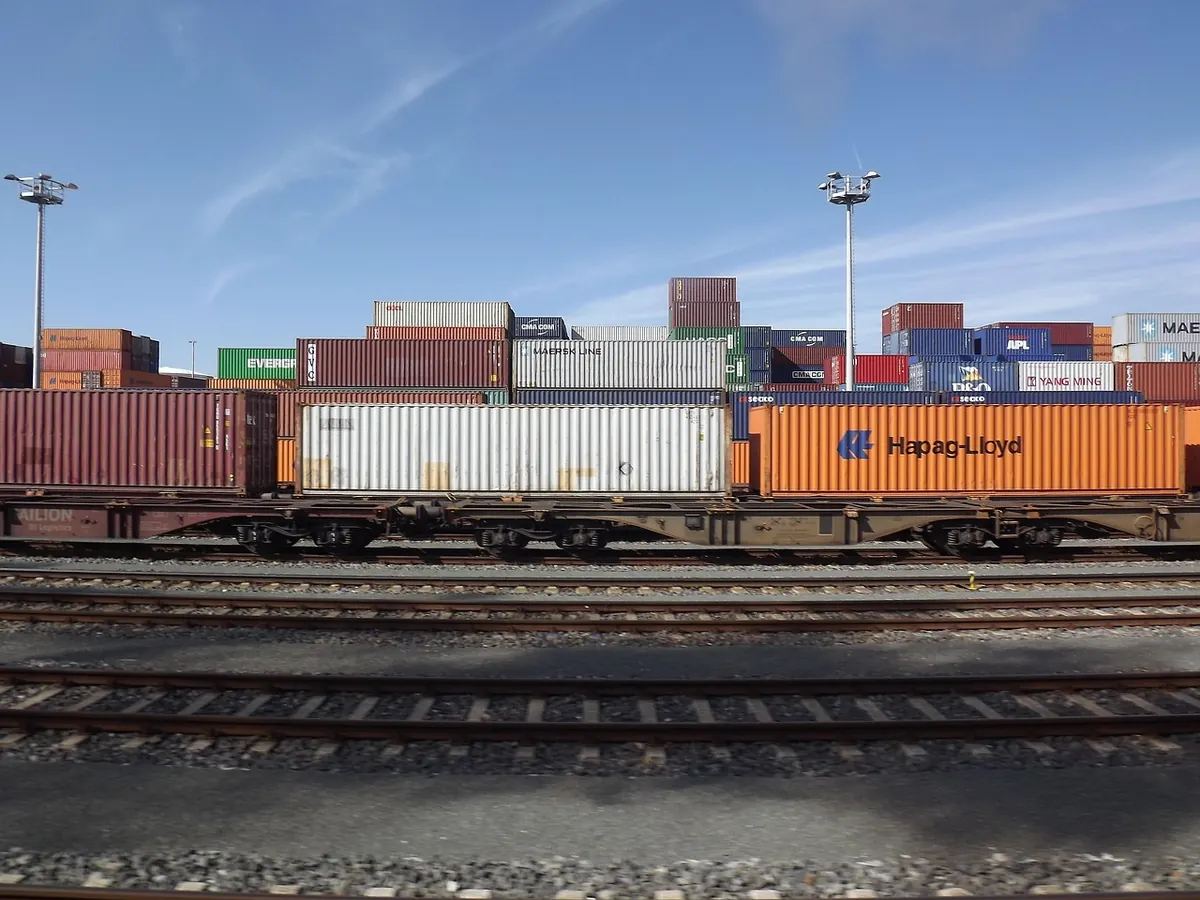
Intermodal splits the trip. Rail handles the long middle distance while trucks handle the ends. Your freight rides in a domestic 53-foot container, an international 40-foot container, or occasionally a trailer parked on a flatcar. Local drayage carriers move it between your dock, the rail ramp, and the receiver.
The mental model matters: OTR is one handoff, intermodal is three or four. Every handoff is a place where time and money can leak.
Cost: Where the Savings Actually Hide
Rail's per-mile economics improve with distance. Industry practice generally treats somewhere in the 500-to-750-mile range as the point where intermodal starts to compete on price, and that threshold shifts with fuel costs, truck capacity, and how good the rail service is on a given corridor.
Compare full costs, not headline linehaul rates:
- OTR: linehaul, fuel surcharge, detention, and accessorials such as lumper fees or reconsignment.
- Intermodal: rail linehaul plus drayage at both ends, chassis rental or usage fees, ramp storage or per-diem if a container sits, and appointment or pre-pull charges.
A door-to-door intermodal quote that includes everything can beat OTR comfortably on a long lane. A quote that quietly excludes chassis and drayage can look cheaper than it is. That's the most common mistake shippers make.
One pattern worth knowing: intermodal pricing tends to be stickier. When truck capacity tightens and spot rates spike, rail contracts often hold steadier. When the truck market is soft, OTR can undercut intermodal on the same lane.
Transit Time and Reliability
OTR moves at the pace of a driver: roughly 500 to 600 miles a day for a solo driver, more with teams. No ramp, no cutoff, no lift.
Intermodal adds time at the edges. There's a cutoff to get the container to the ramp, a train departure, a ramp-to-ramp transit that can be surprisingly fast because trains don't stop for hours-of-service, and then a drayage move to the receiver. On long hauls, rail's middle leg often keeps pace with a solo driver. Where intermodal loses days is at the terminals — an appointment that misses a cutoff can cost 24 hours.
Ask any intermodal provider for ramp-to-ramp versus door-to-door transit, and ask about on-time performance for the specific lane, not the network. Reliability is usually fine in the middle and variable at the ends.
Intermodal's other real advantage is resilience: rail keeps running through driver shortages, weather that snarls highways, and peak-season truck crunches. If your freight absolutely must arrive tomorrow, book the truck.
Capacity, Weight and What Fits
Volume is roughly comparable between a 53-foot trailer and a 53-foot domestic container. A 40-foot international container is a different animal, with considerably less cube and a tighter weight ceiling.
Weight is the deal-breaker more often than people expect. The container, the chassis and rail weight limits all bite into payload, so dense freight — machinery, tile, beverages, bagged material — frequently can't move intermodal at a competitive cost, or can't move legally at all. Get the loaded weight in writing before you commit.
Commodity sensitivity matters too. High-value electronics, temperature-controlled product, and freight that hates shock and vibration usually belong on a truck. Durable, non-perishable goods in the mid-value range are the sweet spot for rail.
On the plus side, intermodal is effectively a second source of capacity. When trucks are scarce, a train absorbs volume the highway market simply doesn't have available.
Drayage: The Part That Decides the Equation
Drayage is the short truck move at each end, and it's where intermodal quotes go sideways. Drayage markets are local and fragmented, so a lane that saves money into one ramp may save nothing into another ten miles away.
Watch these details:
- Free time and detention. Ramp and drayage free time is short. Late pickups generate per-diem on the container, and those charges add up fast.
- Chassis. Availability and cost vary by market and by whether your carrier participates in a pool. Ask who supplies the chassis and what it costs per day.
- Appointments. Some ramps require them, and missing one can push delivery by a day.
- Accessorials. Pre-pulls, storage, flips and re-deliveries rarely appear in the headline rate.
Practical rule: insist on an itemized door-to-door quote. If a provider can't break out drayage, chassis and ramp fees, you don't have a number yet.
Carbon Footprint
Per ton-mile, rail is dramatically more fuel-efficient than trucking, so shifting the long leg to rail usually cuts a shipment's emissions substantially. The catch is the edges. Drayage runs on diesel, and two short truck legs plus terminal handling can erase the benefit on a lane that isn't long enough to justify rail.
If you're tracking emissions for a customer or a reporting program, ask how the figure was calculated — ton-miles versus per shipment, tank-to-wheel versus well-to-wheel — and keep the method consistent across modes. A defensible estimate beats a precise-looking number of unknown origin.
A Simple Way to Test Both
Pick one lane — your longest, heaviest, least time-sensitive one — and run it both ways for a month. Ten to twenty loads is enough to see a pattern.
- Price the lane door-to-door in both modes, itemized.
- Track actual invoiced cost, not quoted rate, including every accessorial.
- Log on-time pickup and delivery for each move.
- Note any damage, shortage or delay claims.
- Compare total landed cost per load, then decide.
Do this lane by lane rather than mode by mode. Plenty of shippers end up with a mixed book: rail on their long runs and trucks everywhere else. There's no loyalty prize for choosing one. The freight doesn't care which mode it rides — only whether it arrives when the receiver needs it at a cost you can defend.
Photo: fantasylife / Pixabay