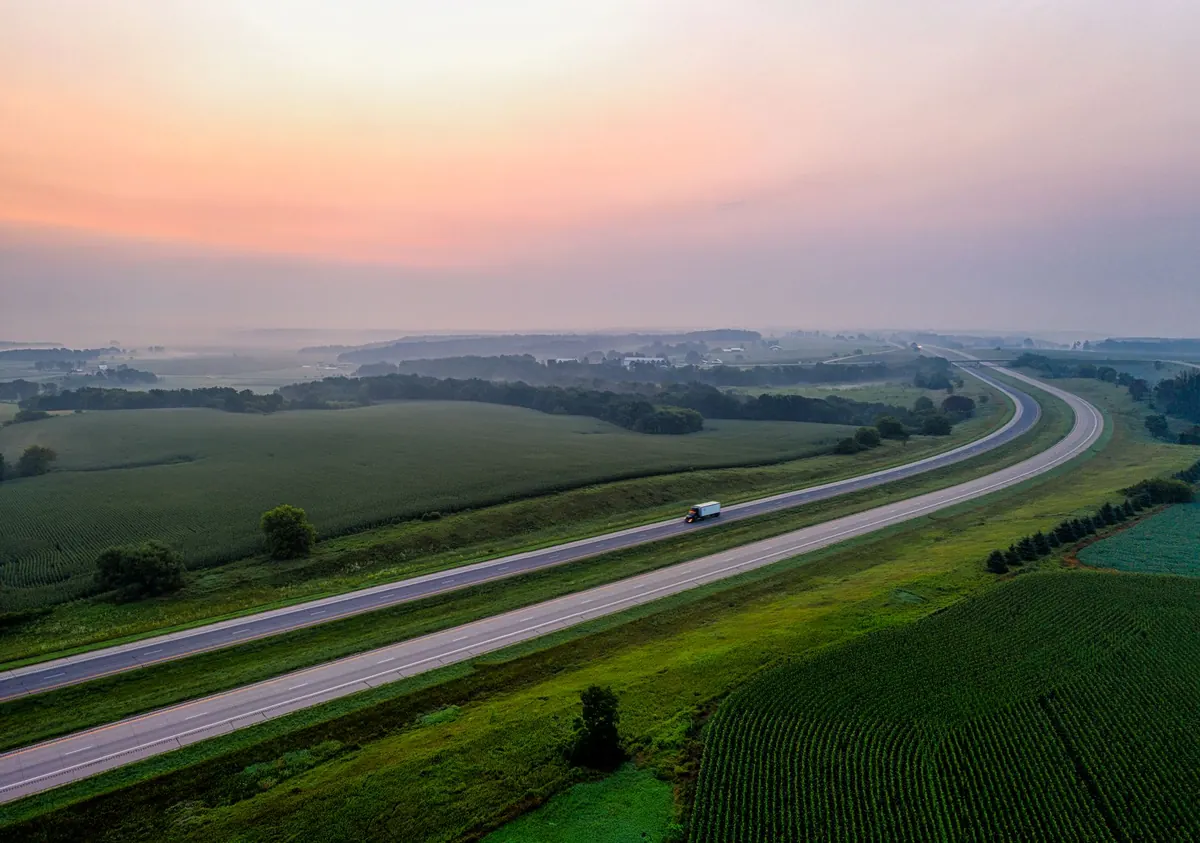
Your first long-haul run looks simple on a map: point A, point B, a line between them. Then you add a loaded trailer, a narrow delivery window, a running clock, and a truck stop where every space is taken by 9 p.m. That's when the line on the map becomes an actual day.
Planning is what closes the gap between the two. Not a rigid script — a plan you can bend when the dock takes four hours instead of one. Here's how to build one for your first trip, and how to keep it working when the day goes sideways.
Start With the Load, Not the Map
Before you open any routing tool, get the details of what you're hauling and where it's going. Route choices follow from the load, not the other way around.
- How much does it weigh, and how tall or wide is the load?
- What are the pickup and delivery appointment windows — and the dock's real hours, not the ones on the paperwork?
- Does the receiver unload, or are you expected to break it down?
- Are permits, escorts, or restricted routes part of this trip?
- Is anything on board that changes where you can stop or how you drive?
Ask dispatch these questions before you roll, even if you feel like you're being a nuisance. Five minutes of clarification about a tight appointment can save an hour of guessing later. If you're unsure how hours-of-service rules or permit requirements apply to your specific situation, confirm with your carrier's safety department instead of trusting a forum thread.
Map the Route in Layers
Route for the truck, not the car. Use a truck-specific routing tool, then cross-check against a motor carrier's atlas. A car-based GPS will happily send you under a bridge you don't fit beneath or down a street with a weight limit, and the detour to fix that mistake is never short.
Build the route in layers and check each one:
- Clearances and weight limits on both your primary and alternate roads.
- Construction and seasonal closures, especially on mountain passes and in northern states.
- Major metro areas — cross them outside rush hour if your clock allows.
- Tolls, scales, and weigh stations along the way, plus how you'll pay.
- Time zone changes, which quietly shift your appointment math.
Truck-accessible fuel islands matter too. A station that looks convenient on the map may have a canopy too low for your trailer. Write the key turns, exits, and turnarounds on paper. Phone batteries die, and so does cell service in exactly the places you need it most.
Plan Around Your Clock, Not Just the Road
Reading your own clock matters as much as reading the highway. Hours-of-service rules set the ceiling — the familiar 11-hour driving limit inside a 14-hour window, a required break after a set number of cumulative driving hours, and a long off-duty period to reset. Because exemptions and exceptions exist, read the current regulations and your carrier's policy rather than working from memory. For anything with legal or financial consequences, get advice from a qualified professional.
The ceiling isn't the plan. As a new driver, don't build a day that requires you to drive the full limit and arrive with zero margin. Traffic, a slow scale, and a shipper who takes an extra hour are normal, not exceptional.
A plan that only works when nothing goes wrong isn't a plan.
Give yourself an hour of buffer for every six to eight hours of driving on your first few trips. You'll lose some of it, and you'll be glad for the rest.
Fuel Stops: Decide Them Before the Gauge Does
Fuel at half a tank, not when the warning light comes on. It sounds excessive until you're 70 miles from the next truck stop with a headwind and a long climb ahead. Treat half a tank as your trigger and you'll always have a choice about where to stop.
- Fill up before long empty stretches, not in the middle of them.
- Know which stops take your fuel card before you pull in.
- Top off DEF and check reefer fuel separately if you're pulling a reefer.
- Avoid peak hours when every island is occupied and you're blocking the lot.
Fuel prices swing a lot between stops, and cost matters over a career. On your first run, prioritize reliable access and easy exits over chasing a few cents.
Parking: Reserve It or Race for It
Parking is the hardest part of a long day, and it gets harder the later you arrive. On early trips, aim to shut down by mid-afternoon. Reserve a spot when the option exists — many chains and apps let you hold a space, and that reservation is worth more than the time it takes to book.
Always carry three options: your primary stop, one 40 to 60 miles earlier, and one further along as a last resort. Never assume the last option will be open. Do not park on an entrance ramp or shoulder because the lot was full; it's dangerous and, in most places, illegal. If you take the final space, park straight, shut down quietly, and be gone at a reasonable hour.
Build a Backup Plan for Every Leg
Assume at least one thing per trip will go wrong. Delayed loading. A closed pass. A blown tire. A receiver who won't take you until morning.
Write down what you'd do in each case before it happens: the number for roadside assistance, the nearest dealer that services your truck, a second route around the closure, and the contact who can rebook a delivery. Then do the most important thing — call early. Dispatch can often move an appointment or adjust the next load, but only if they know before the problem becomes a crisis.
The Night-Before Checklist
- Confirm appointment times, addresses, and which gate you enter through.
- Recheck clearances and construction on the full route.
- Lock in primary, backup, and emergency parking.
- List fuel stops and confirm they're truck-accessible.
- Check weather across the whole route, not just at your starting point.
- Pre-trip the truck and trailer in daylight if you can.
- Charge your phone, download offline maps, and screenshot the route.
- Write the day plan on paper and keep it within reach.
The First Run Is a Calibration Run
You will finish your first long haul with better numbers than any planner gave you: how long that dock really takes, how far you actually run before you want a break, which stops have space at night. Write those numbers down. Within a few trips you'll be planning from your own experience rather than someone else's estimate — and the second long haul will feel like a completely different job.
Photo: Tom Fisk / Pexels